Hantavirus explained: how does it spread and who is most at risk?

Loading player...
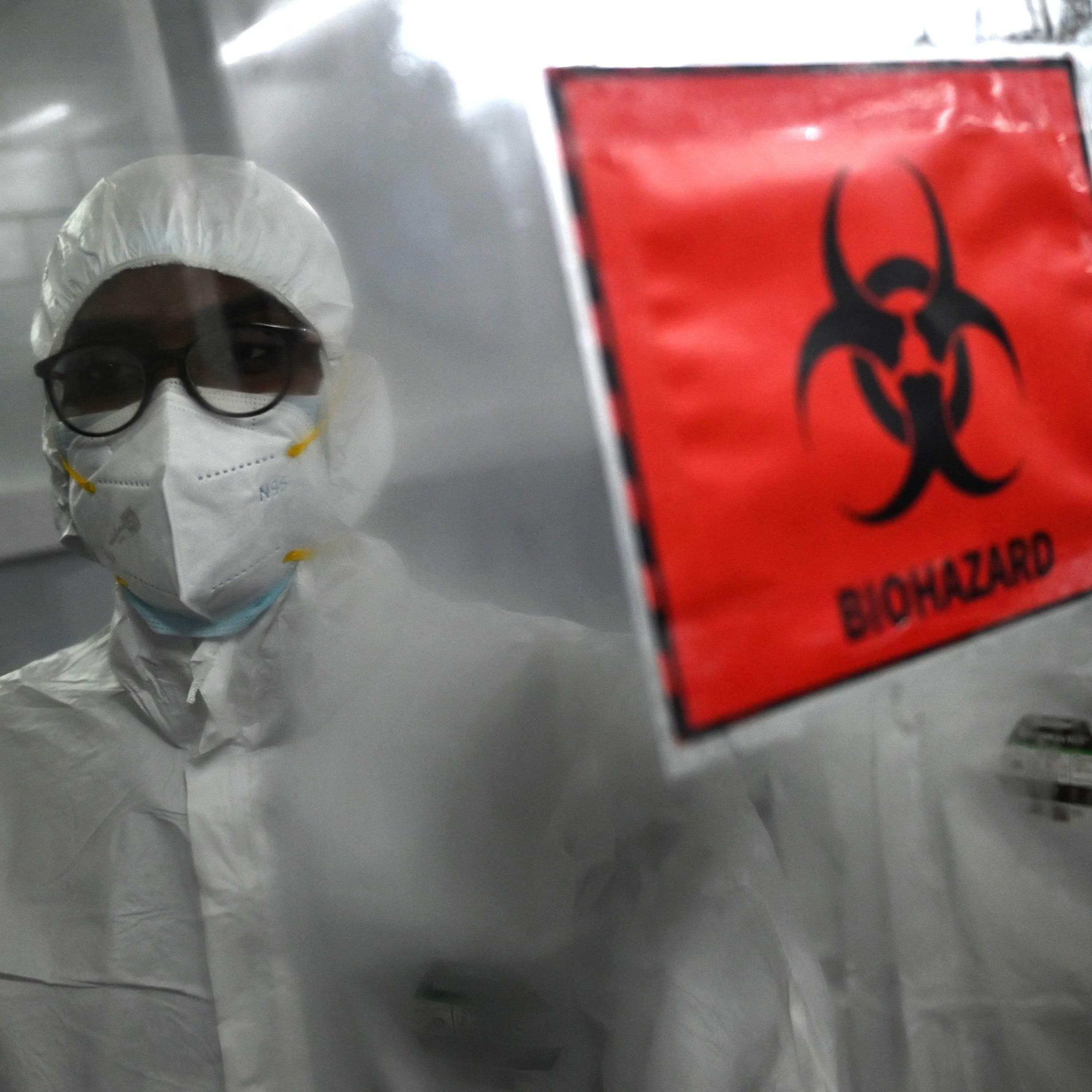
Three people have died after an outbreak of hantavirus onboard a cruise ship travelling from Argentina to Cape Verde. The World Health Organization says that a total of seven cases – two confirmed by laboratory testing and five suspected – have been identified on the cruise ship so far. They are also investigating whether rare human-to-human transmission of the virus could be behind the cases. Madeleine Finlay talks to Prof Jonathan Ball from Liverpool School of Tropical Medicine to find out where the virus comes from, how it is transmitted to humans, and what health agencies will be doing to try to contain it. Help support our independent journalism at theguardian.com/sciencepod

5 May English United Kingdom Science · Nature

Other recent episodes

Elizabeth Holmes is back in the spotlight: why can’t we look away?

You Can See Everything, a documentary about the disgraced biotech company founder Elizabeth Holmes, has enjoyed a record-breaking opening in the US. It is a testament to how fascinated we remain by the convicted fraudster, but what is behind the enduring appeal? US technology editor Blake Montgomery tells Madeleine Finlay…
22 Oct 17 min

‘These risks are real’: the threat of AI bioweapons

In his annual speech on threats to the nation, Sir Ken McCallum, the head of the UK’s intelligence service, MI5, warned that AI had the potential to ‘change the stakes’ on existing and even new bioweapons. To find out why, and how, Ian Sample speaks to Dr Tom Inglesby, director…
20 Oct 15 min

Is your boss watching you? The rise of AI surveillance at work

Workers have always been monitored by their bosses, first through output targets, and then via computer software labelled ‘bossware’. But AI is transforming the capabilities of these systems, processing huge volumes of data to provide minute-by-minute accounts of activity, and productivity. To find out more, Ian Sample hears from UK…
15 Oct 17 min

The surprising psychology of morbid curiosity

US defence secretary Pete Hegseth’s plan to livestream the execution of Nidal Malik Hasan has incurred condemnation from human rights groups and politicians on all sides. But according to Coltan Scrivner, an author and psychologist at Arizona State University and expert on morbid curiosity, people are still likely to watch…
13 Oct 17 min

All the news and science from the 2026 Nobel prizes

This year’s Nobel prizes in chemistry, physics and physiology or medicine have celebrated work that has been used to develop countless drugs and transform modern medicine, allowed physicists to observe one of the most mysterious particles, and provided a tool that could act as an on/off switch for brain cells…
7 Oct 23 min